Pregnancy Week 35:
You're now just 5 weeks away from meeting your little one! Your baby is growing quickly, and
your body is preparing for labor. It's time to finalize your birth plan and get ready for the
big day!
Exciting News!
At 35 weeks, your baby is almost ready to enter the world! Your body
is working hard to prepare for labor, so focus on staying positive, hydrated, and comfortable. It's just
a matter of time before you meet your little bundle of joy.
Mom’s Health Concerns
Weight gain: You may have gained 15-20 kg by now.
Difficulty walking due to pelvic pressure and baby’s
weight.
Increased swelling in feet and ankles (normal
unless sudden).
Fatigue and back pain due to the growing baby.
Increased vaginal discharge, which is normal unless
it smells or has blood.
Disrupted sleep due to frequent urination or
discomfort.
Increased appetite as baby’s growth peaks.
Baby Activities
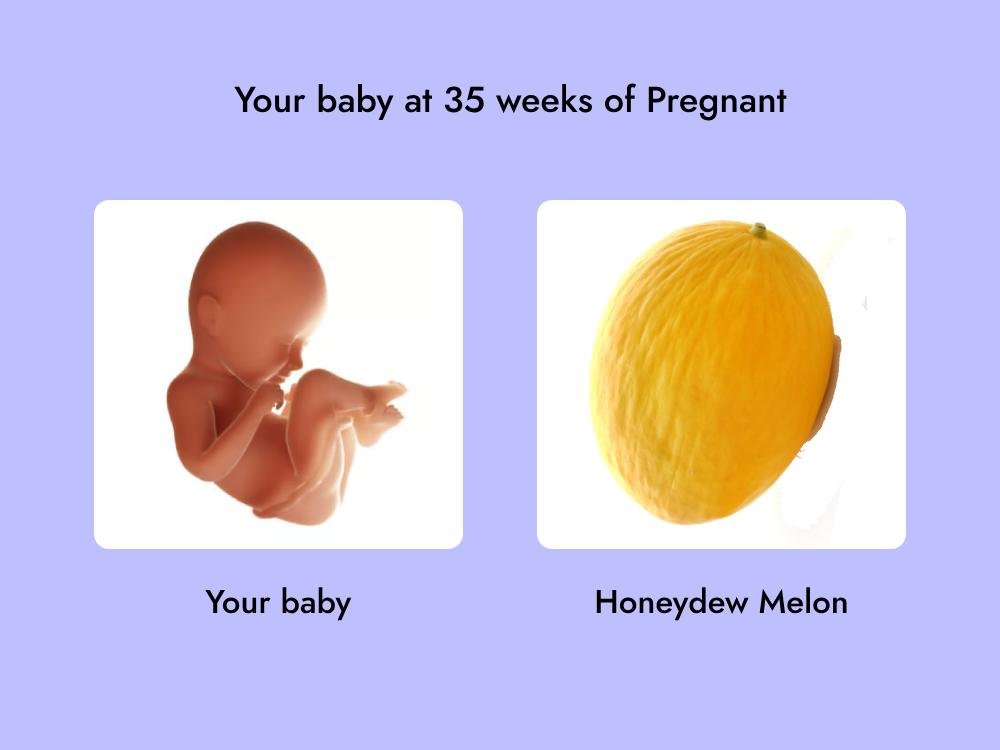
Your baby is about the size of a honeydew melon,
measuring around 46 cm (18 inches) long and weighing approximately 2.4-2.6 kg (5.3-5.7
lbs).
Brain development is at its peak, making your baby
smarter every day.
Lungs are almost fully developed, preparing for the
first breath.
Eyes can now respond to light and follow movements
inside the womb.
Baby’s bones are hardening, except for the skull,
which remains soft for birth.
Baby gains about 200-250 grams per week to build fat
for warmth.
Baby’s immune system is strengthening to fight infections after birth.
Baby is likely in a head-down position, preparing
for birth.
Symptoms
●trong and frequent baby movements – Kicks, rolls, and stretches may feel intense.
Shortness of breath – Baby is pushing against your
diaphragm.
●Increased pelvic pressure as baby starts dropping
lower into your pelvis.
●Frequent urination as the baby puts pressure on
your bladder.
●Braxton Hicks contractions (practice contractions)
are becoming stronger and more frequent.
●Back pain and pelvic discomfort due to the baby’s
growing weight.
●Swelling in feet, hands, and ankles (normal unless
it’s sudden or severe).
●Leaking colostrum from breasts – Your body is
getting ready for breastfeeding.
●Fatigue and difficulty sleeping due to discomfort
and frequent bathroom visits.
emotional changes
Excitement and anticipation about meeting your baby.
Strong nesting instinct – You may want to clean, organize, and prepare.
Anxiety about labor and delivery – Consider attending prenatal classes.
Mood swings due to hormonal changes and anticipation.
When to Call the Doctor
Severe abdominal pain or intense cramps.
Heavy vaginal bleeding or abnormal discharge.
Frequent, painful, or regular contractions (could be early labor).
Sudden swelling in hands, face, or legs (sign of
preeclampsia).
Blurred vision, dizziness, or severe headache.
Reduced baby movements or no movement for a few hours.
Preparation Tips for Week 35
Pack your hospital bag – Include clothes, baby essentials, and documents.
Discuss your birth plan with your doctor – Normal delivery or C-section.
Pre-register at your hospital if required.
Stock up on postpartum essentials like sanitary
pads, nursing bras, etc.
Hydrate and rest as much as possible.
Prepare the baby’s crib and nursery for your newborn.
Communicate with your partner about labor expectations and support.
The Good
The Bad
Food to Eat
Protein for muscle development – Eggs,
chicken, fish, tofu, lentils, nuts.