Exciting News!
Pregnancy Week 36: At 36 weeks, your baby is considered early-term and could arrive anytime now!Your
body is getting ready for labor, and you might start feeling contractions or pressure. Stay relaxed,
hydrated, and prepared. Your little one is almost here!
You’ve officially entered Month 9 of your pregnancy! Your baby can now arrive anytime within the next 4-5
weeks, and your body is preparing for labor. It’s time to slow down, relax, and ensure everything is
ready for your little one’s arrival.
Mom’s Health Concerns
- Weight gain: You may have gained 16-20 kg by now.
- Increased pelvic pressure as the baby drops lower.
- Difficulty walking or climbing stairs due to pelvic
and back pain.
- Increased vaginal discharge as the body prepares
for labor.
- Shortness of breath may slightly reduce once the
baby drops.
- Difficulty sleeping due to discomfort, frequent
urination, or anxiety.
- Mild swelling in feet and hands is normal.
- Increased nesting instinct – You may feel the urge
to clean and organize everything.
Baby Activities
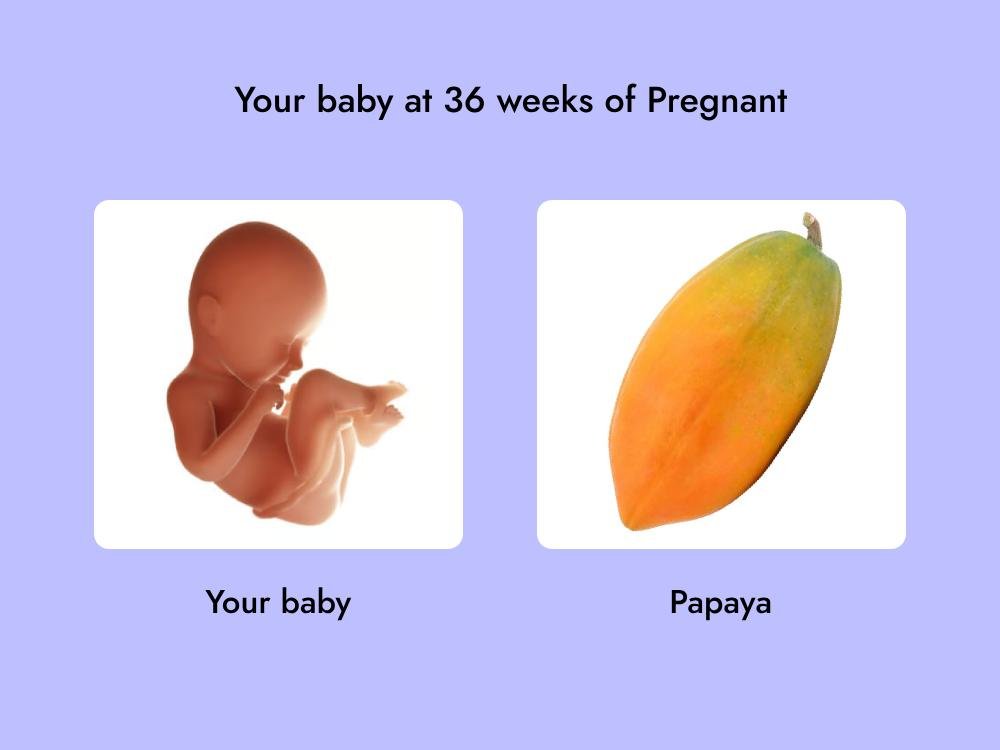
- Your baby is about the size of a papaya , measuring
around 47 cm (18.5 inches) long and weighing approximately 2.6-2.8 kg (5.7-6.1 lbs).
- Baby’s lungs are fully developed, and the baby can
breathe on its own if born now.
- Skin becomes smooth and plump as fat layers continue
to build.
- Head-down position – Most babies settle in a
head-down position preparing for birth.
- Baby’s immune system is strengthening, receiving
antibodies from the mother.
- Nervous system and brain development continue.
-
Hiccups and strong kicks are still common as the baby moves.
Symptoms
-
Baby dropping (lightening) – You may feel the baby move down into your pelvis, making it
easier to breathe but increasing pelvic pressure.
-
Increased pelvic pressure – Walking or standing for long periods may feel uncomfortable.
- Frequent urination – Due to the baby pressing on
your bladder.
-
Braxton Hicks contractions – Stronger and more regular practice contractions.
- Back pain and leg cramps – Due to the baby’s weight
and position.
- Colostrum (early breast milk) leakage – Your body is
preparing for breastfeeding.
- Heartburn, indigestion, and bloating – The baby
pressing on your stomach can cause discomfort.
- Swollen feet, hands, and ankles – Mild swelling is
normal, but sudden swelling requires medical attention.
- Fatigue and sleepless nights – Getting comfortable
in bed may become difficult.
emotional changes
-
Excitement mixed with anxiety about labor and delivery.
-
Fear of pain or complications during labor – Discuss your concerns with your doctor.
-
Strong nesting instinct – You may want to prepare the baby’s room or pack your hospital
bag.
-
Mood swings due to hormonal changes.
-
Eagerness to meet your baby – It’s almost time!
When to Call the Doctor
-
Severe abdominal pain or strong, regular contractions (could be labor).
- Heavy vaginal bleeding or unusual discharge.
-
Sudden swelling in hands, face, or legs (sign of preeclampsia).
- Blurred vision, severe headaches, or dizziness.
-
Reduced baby movements or no movement for hours.
-
Water breaking (gush or slow leak) – This could mean labor has started.
Preparation Tips for Week 36
-
1.Pack your hospital bag – Include clothes, toiletries, baby essentials, documents, and
snacks.
- 2.Prepare a baby corner – Crib, clothes, diapers,
and baby toiletries should be ready.
-
3.Discuss your birth plan with your doctor (vaginal delivery, C-section, pain relief).
- 4.Pre-register at the hospital if you haven’t
already.
-
5. Keep postpartum essentials like maternity pads, comfortable clothing, and nursing
bras ready.
-
6. Stay calm and relaxed – Practice breathing exercises and meditation.
Labor Signs to Watch For
-
Water breaking (gush of fluid).
- Regular and painful contractions (every 5 minutes).
-
Heavy pressure in the pelvis.
- Lower back pain that doesn’t ease.
-
Bloody show (mucus plug coming out).