Pregnancy Week 39: You’ve finally reached Week 39 of your pregnancy — only a few days to go! Your baby is now fully developed and can arrive any moment. You might feel a mix of excitement, anxiety, and anticipation. Your body is giving clear signs that labor is near, and your baby is just waiting for the perfect time to enter the world.

Mom’s Health Concerns
  • Weight gain: You may have gained 18-24 kg by now.
  • Back pain and pelvic pressure may feel intense.
  • Increased urination as the baby’s head presses on your bladder.
  • Increased vaginal discharge or losing your mucus plug.
  • Swelling in feet, face, or hands (mild swelling is normal).
  • Shortness of breath may improve as the baby drops lower.
  • Nausea, vomiting, or loose stools – Your body is preparing for labor.
  • Increased fatigue or sudden bursts of energy (both are normal).
Baby Activities
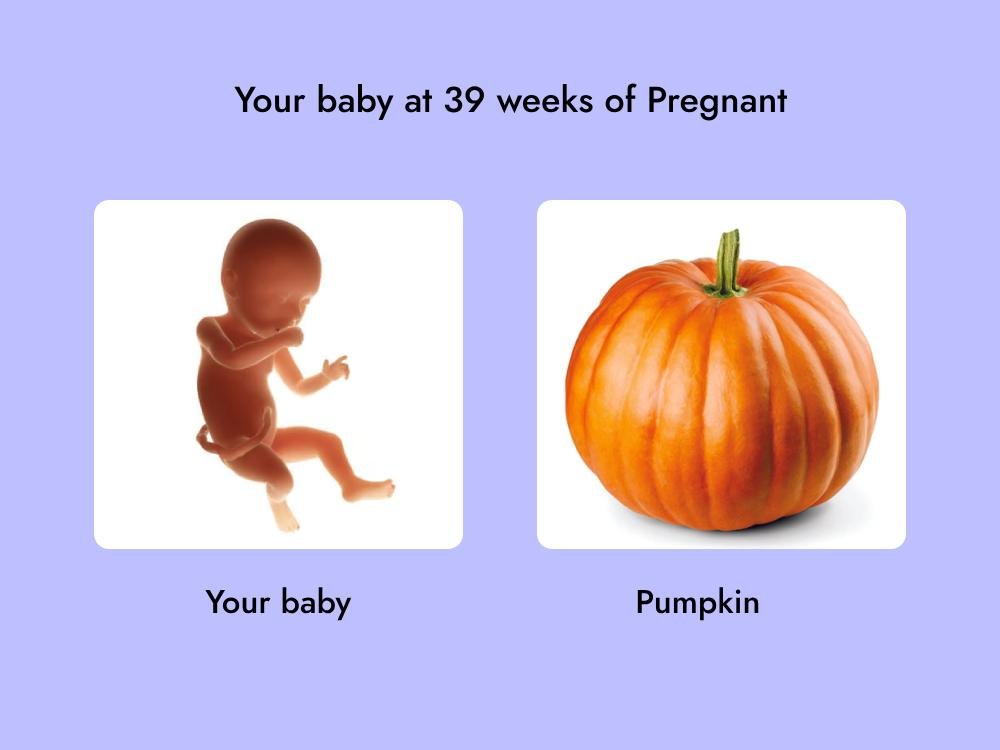
  • Your baby is now about the size of a watermelon , measuring around 50 cm (20 inches) and weighing approximately 3.2-3.4 kg (7-7.5 lbs).
  • Lungs are mature – Your baby can breathe on their own if born now.
  • Baby’s brain and immune system are fully developed.
  • Baby’s skin is soft and plump with fat layers.
  • Baby’s head is engaged in the pelvis, preparing for delivery.
  • Movements may slow down, but you should still feel kicks.
  • The umbilical cord is still providing nutrients, but soon the baby will rely on breast milk.
  • Fingernails, toenails, and hair are fully grown.
Symptoms
  • Increased pelvic pressure – Baby has moved deeper into the pelvis.
  • Braxton Hicks contractions – More frequent and stronger practice contractions.
  • Mucus plug discharge – You may notice a thick, jelly-like, slightly bloody discharge (sign labor is close).
  • Increased vaginal discharge – Thin, clear, or white discharge is normal.
  • Lower back pain and leg cramps – The baby’s weight is increasing pressure.
  • Colostrum leakage – You may leak yellowish fluid from your breasts.
  • Difficulty sleeping – Anxiety and discomfort can disturb your sleep.
  • Nesting instinct – You may feel an urge to clean and organize everything.
  • Loose stools or diarrhea – Your body is naturally clearing itself before labor.
  • Sudden energy burst – Your body may feel energized just before labor starts.
emotional changes
  • Excitement and anticipation to meet your baby.
  • Anxiety or fear about labor pain or delivery.
  • Strong nesting instinct – You may feel the urge to clean or organize.
  • Mood swings – Hormonal shifts may cause you to feel overwhelmed.
  • Constant thoughts about labor and delivery.
  • Tears of joy or nervousness – It’s absolutely normal!
When to Call the Doctor (Labor Signs)
  • Regular and painful contractions (every 5 minutes for 1 hour).
  • Water breaking (fluid may gush or leak slowly).
  • Heavy vaginal bleeding or abnormal discharge.
  • Baby’s movements slow down or stop.
  • Severe back pain or unbearable pelvic pressure.
  • Blurred vision, dizziness, or severe headaches (signs of preeclampsia).
  • Sudden swelling in hands, face, or feet.
Signs That Labor Is Very Near
    Signs What It Means
    Water breaking Labor will start within 24 hours in most cases.
    Mucus plug discharge Thick, blood-tinged mucus coming out.
    Strong contractions Contractions every 5 minutes or less lasting 60 seconds.
    Severe back pain Indicates the baby is moving into position.
    Increased pelvic pressure Baby’s head is fully engaged in the pelvis.
    Diarrhea or nausea Body naturally preparing for labor.
Preparation Tips for Week 39
  • Keep your hospital bag ready – Include baby clothes, toiletries, nursing pads, etc.
  • Arrange transportation to the hospital – Have a backup plan.
  • Keep all your documents ready – Hospital papers, ID proof, insurance, etc.
  • Postpartum care items – Nursing bras, sanitary pads, and comfortable clothes should be ready.
  • Stock up on newborn essentials – Diapers, baby clothes, blankets, etc.
  • Postpartum essentials – Sanitary pads, comfortable clothes, nipple cream, etc.
  • Stay hydrated and well-rested.
  • Avoid long travel or staying alone.
  • Discuss your birth plan with your doctor (normal or C-section delivery).
Labor Pain Relief Options
    Pain Relief Option Description
    Epidural (most common) Numbs the lower body but keeps you awake.
    IV Medication Reduces pain but may cause drowsiness.
    Breathing techniques Helps control pain naturally.
    Warm water bath Relaxes muscles and reduces pain.
What to Expect During Labor
  • Early labor – Mild contractions (30-60 seconds every 5-10 minutes).
  • Active labor – Stronger contractions (every 5 minutes, lasting 1 minute).
  • Water breaking – You may feel a gush of fluid.
  • Baby’s head crowning – Intense pressure in the pelvis.
  • Delivery – Your baby will be in your arms within minutes!
  • Remember: If you experience severe pain, heavy bleeding, or water break, call your doctor or rush to the hospital immediately.
  • Your baby is about to enter the world — get ready for the most beautiful moment of your life!
safe-actions
The Good
green-signal
green-signal
green-signal
green-signal
The Bad
red-signal
red-signal
red-signal
red-signal
Food to Eat
  • Energy-boosting foods – Eggs, chicken, fish, lentils, nuts, and seeds.
  • Iron-rich foods – Spinach, red meat, beans, dates, and dry fruits.
  • Calcium for strong bones – Milk, cheese, yogurt, and leafy greens.
  • Fiber-rich foods – Whole grains, fruits, vegetables, and oats.
  • Hydrating foods – Coconut water, fresh juices, and water.
  • Small, frequent meals to avoid heartburn.
  • Healthy fats – Avocados, nuts, and seeds for energy.
Food To Avoid
  • Raw or undercooked meat, eggs, and seafood.
  • Unpasteurized dairy products.
  • High-mercury fish like shark, swordfish, king mackerel.
  • Excess caffeine (limit to 200 mg/day).
  • Spicy or oily food to avoid heartburn.
  • Heavy meals that cause bloating.
Play Store